 CARE ASSISTANT
 EL
ELMaterials and fabrics: what is inside a protection
Twelve short chapters to understand each layer, from cellulose to breathable film, and what our laboratory adjusts for better final performance. For families, buyers and carers.
These pages describe materials and test methods in general terms. The exact characteristics of each product are on its technical sheet; they evolve with our laboratory work.
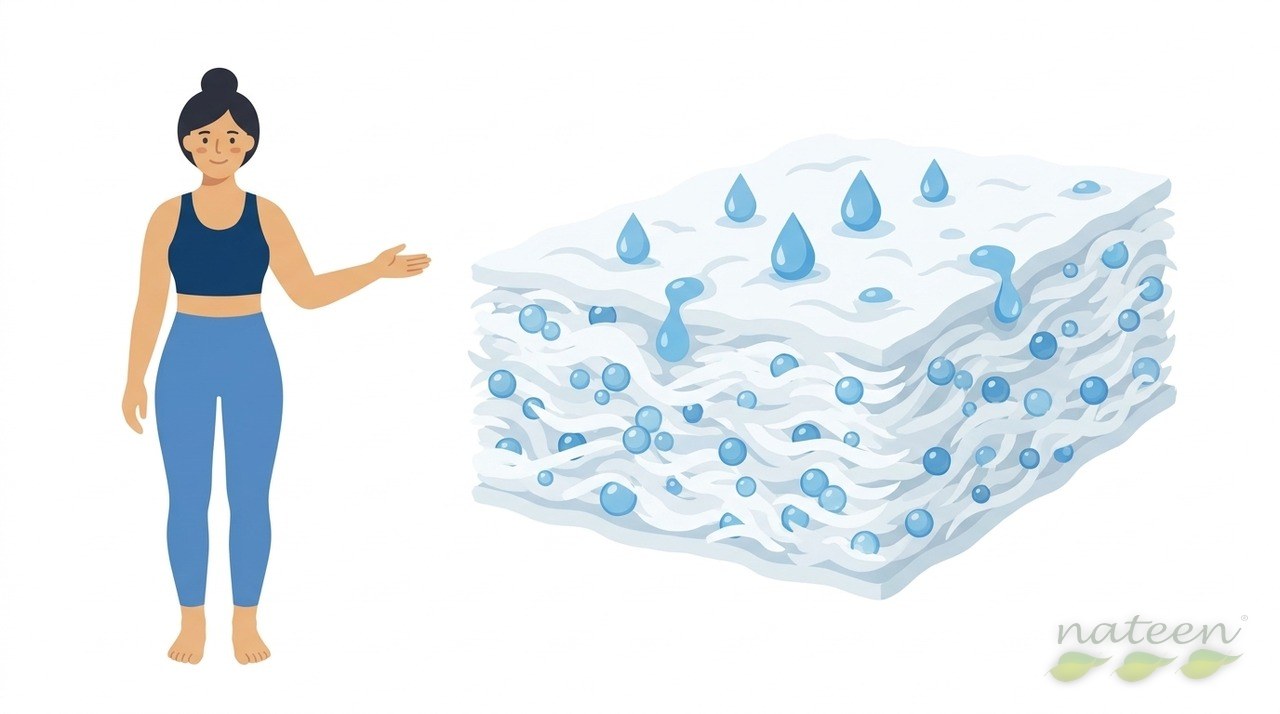
This is the layer that holds the liquid. Its capacity, speed and behaviour under pressure depend on the superabsorbent / cellulose pair and on how they are blended.
Read the chapter →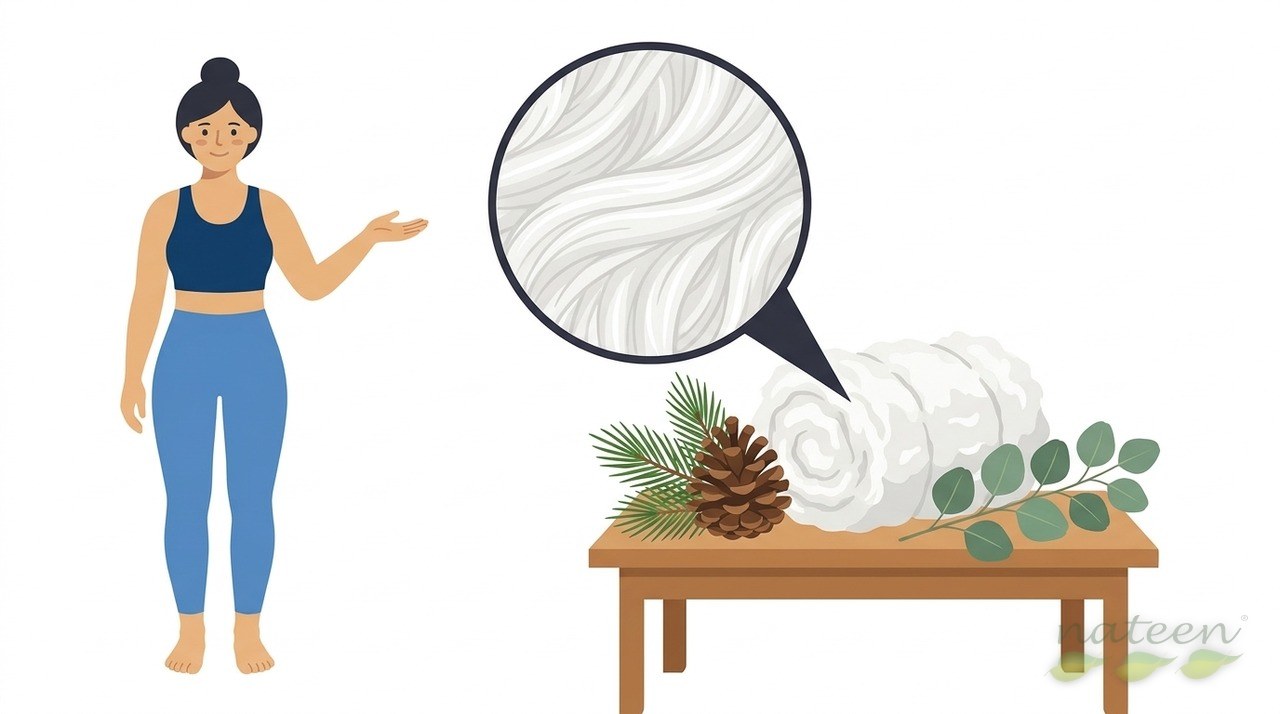
The cellulose of an absorbent core is not ordinary paper. It is a fluff pulp whose fibre, species and defibring make the softness and speed of the product.
Read the chapter →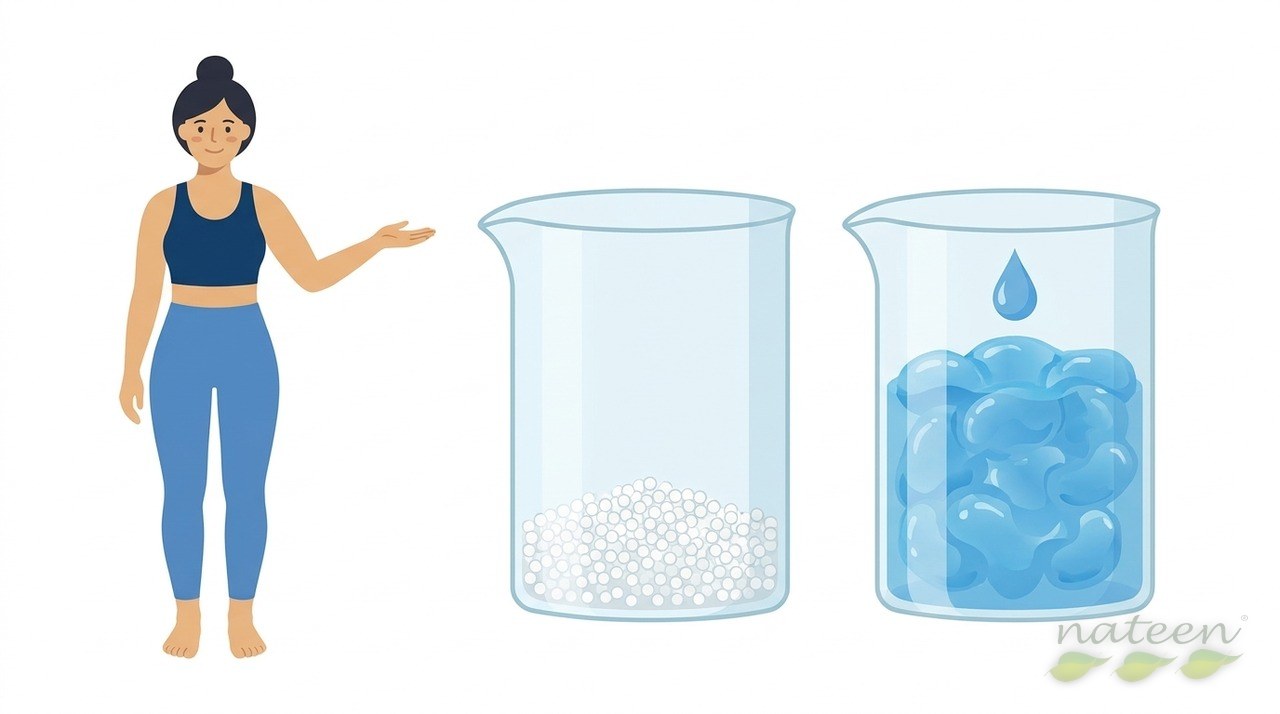
Superabsorbent polymer holds several dozen times its weight in liquid. Its particle size and kinetics decide the speed and the hold of the product.
Read the chapter →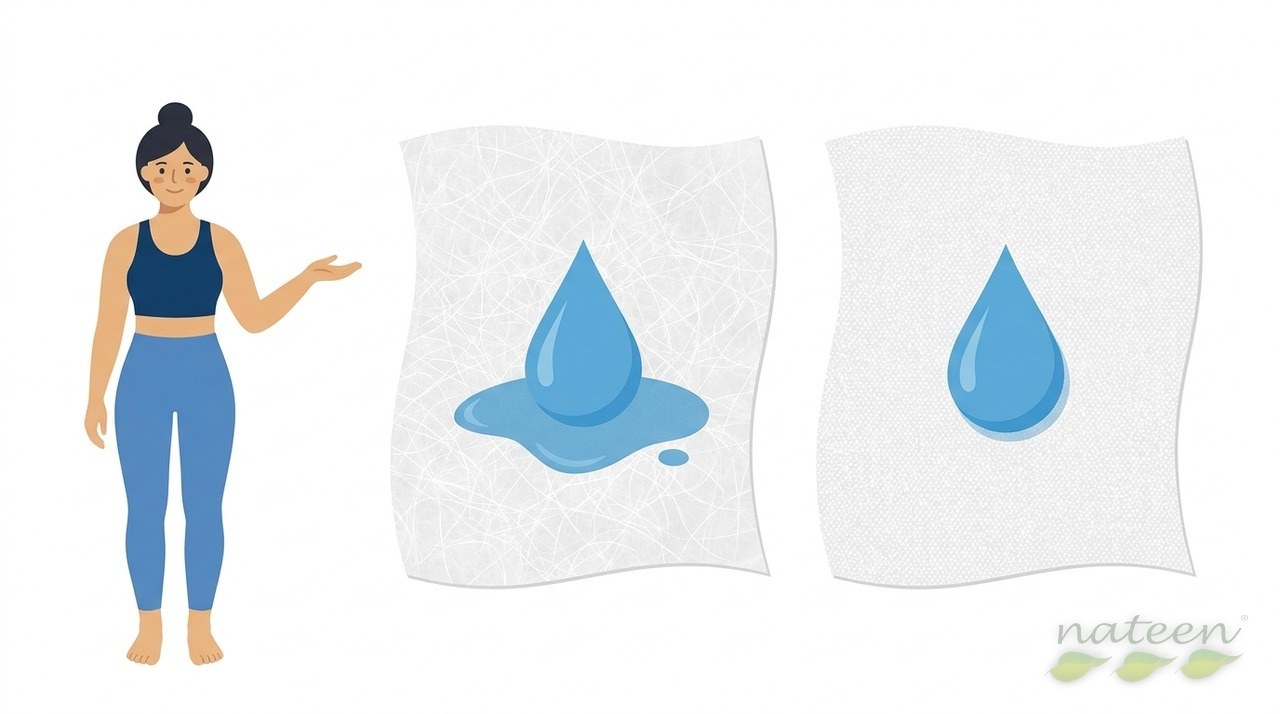
A nonwoven is a web of fibres bonded without weaving. Depending on its treatment it lets liquid through or stops it. A protection uses several, each in its place.
Read the chapter →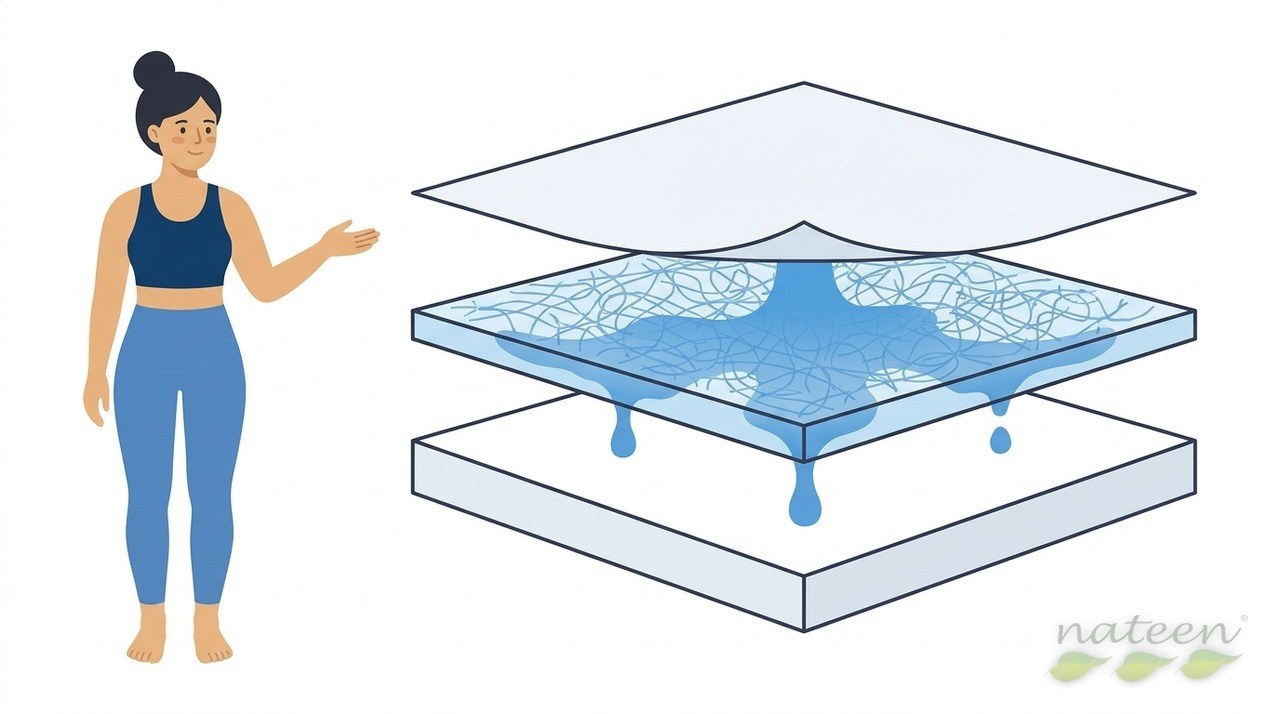
Between the top sheet and the core, a distribution layer, the ADL, receives the void, spreads it and lets it go down. Without it, liquid piles up at the point of impact.
Read the chapter →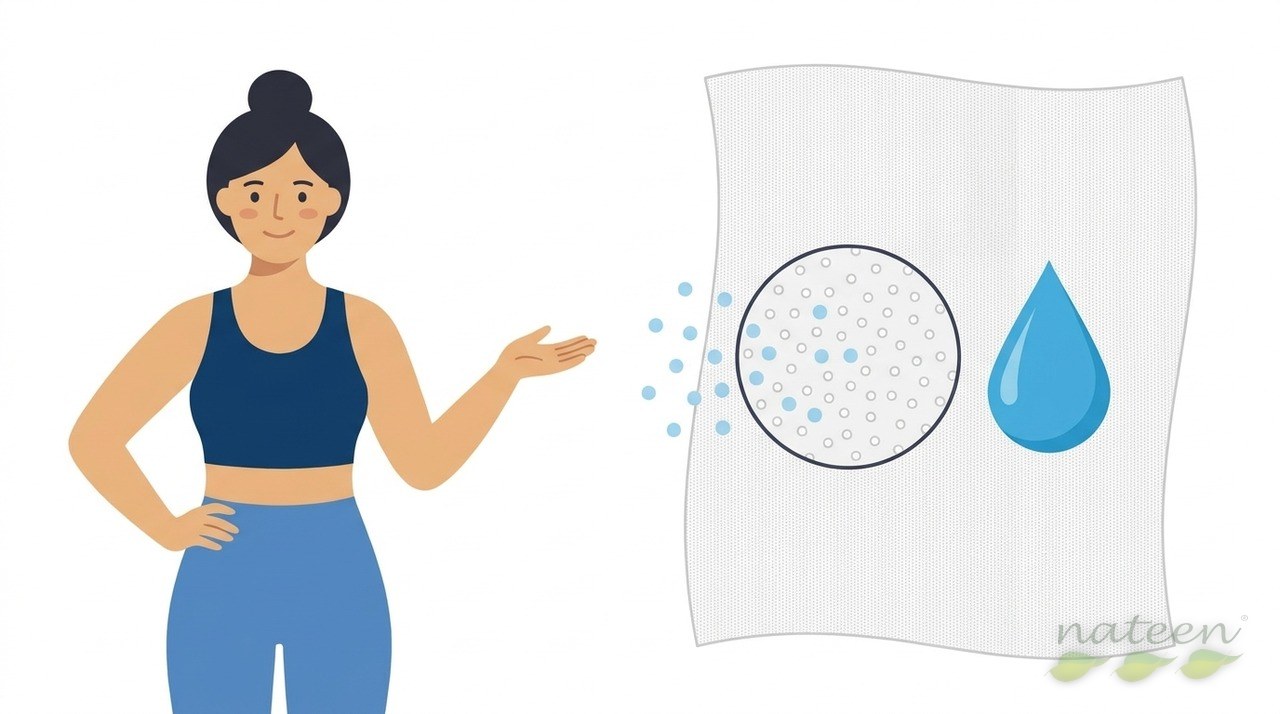
The outer face must stop liquid, let water vapour out, resist tearing and stay quiet. A microporous polyethylene film, often laminated to a nonwoven, does these jobs.
Read the chapter →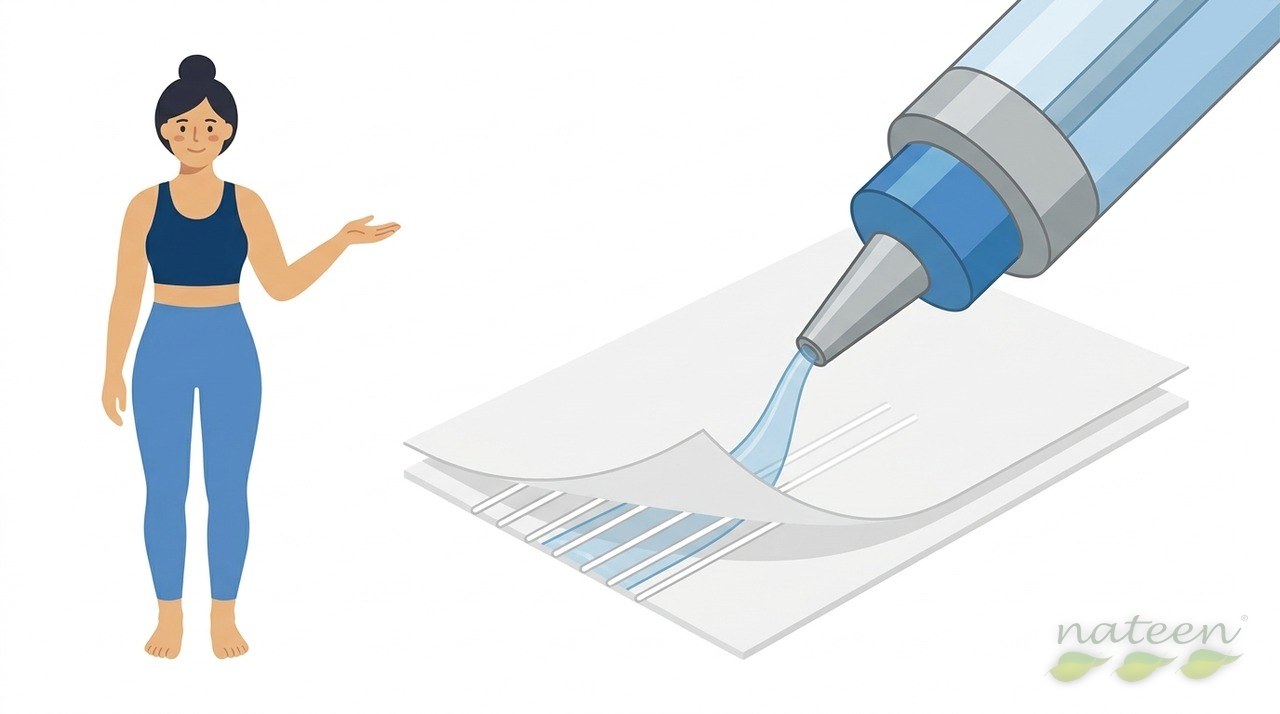
A protection is assembled without stitching. Hot-melt adhesives, laid hot in very fine threads, bond the layers and hold the elastics.
Read the chapter →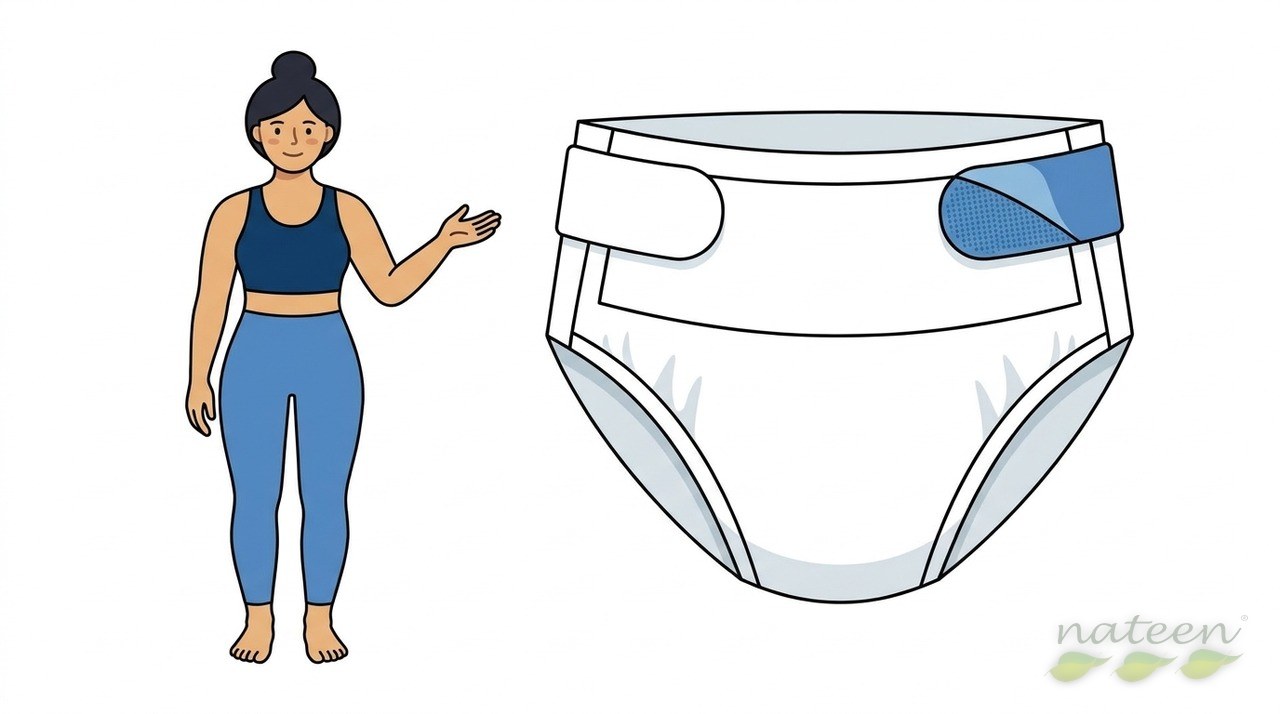
On a brief with tabs, the tabs make the hold. Their type, their surface and the frontal tape they fasten to decide comfort and the ability to readjust.
Read the chapter →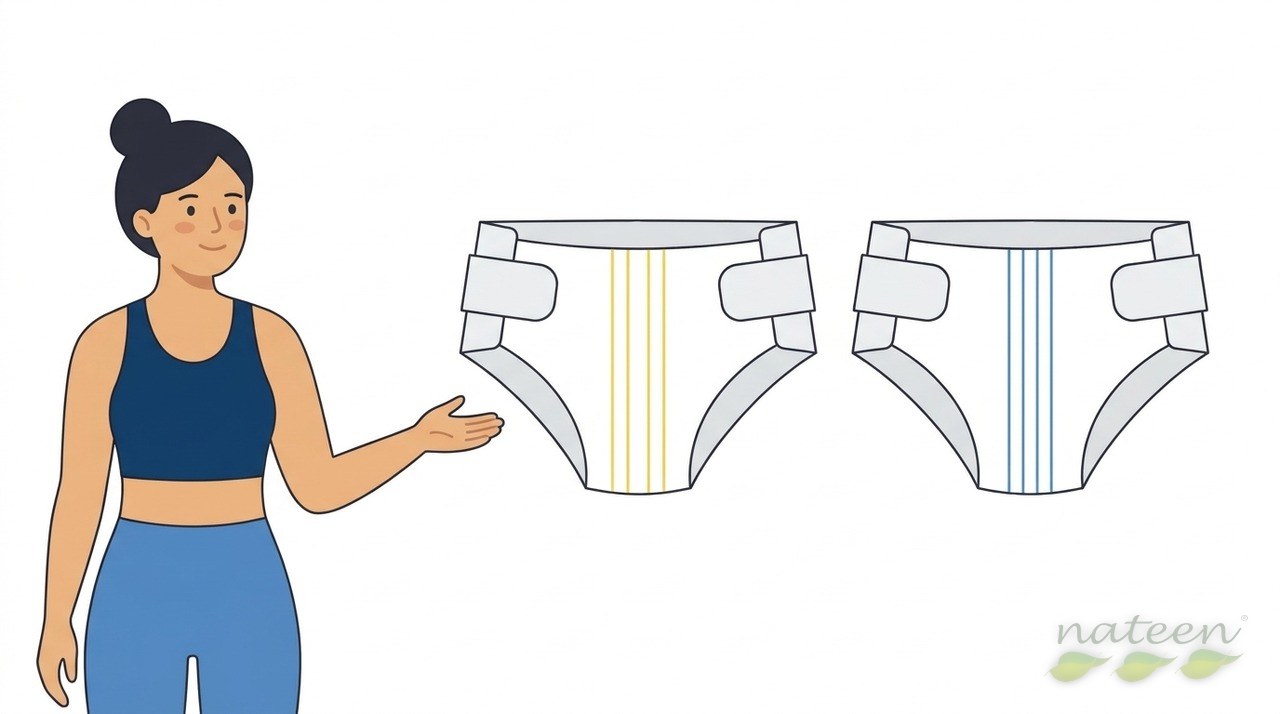
On the outer face, lines change colour when the core is wet. You know when to change, without opening or waking anyone.
Read the chapter →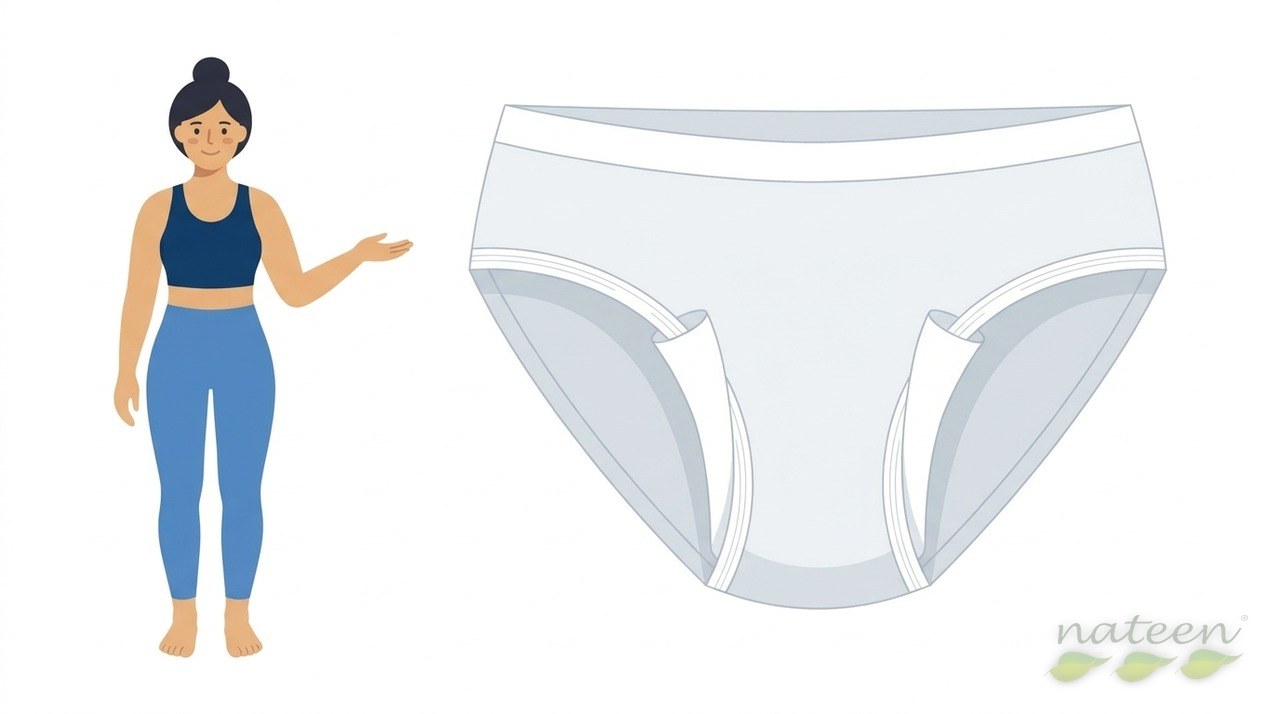
Elastane threads under tension and barriers standing along the thighs close the product without squeezing. This is what blocks leaks when lying and sitting.
Read the chapter →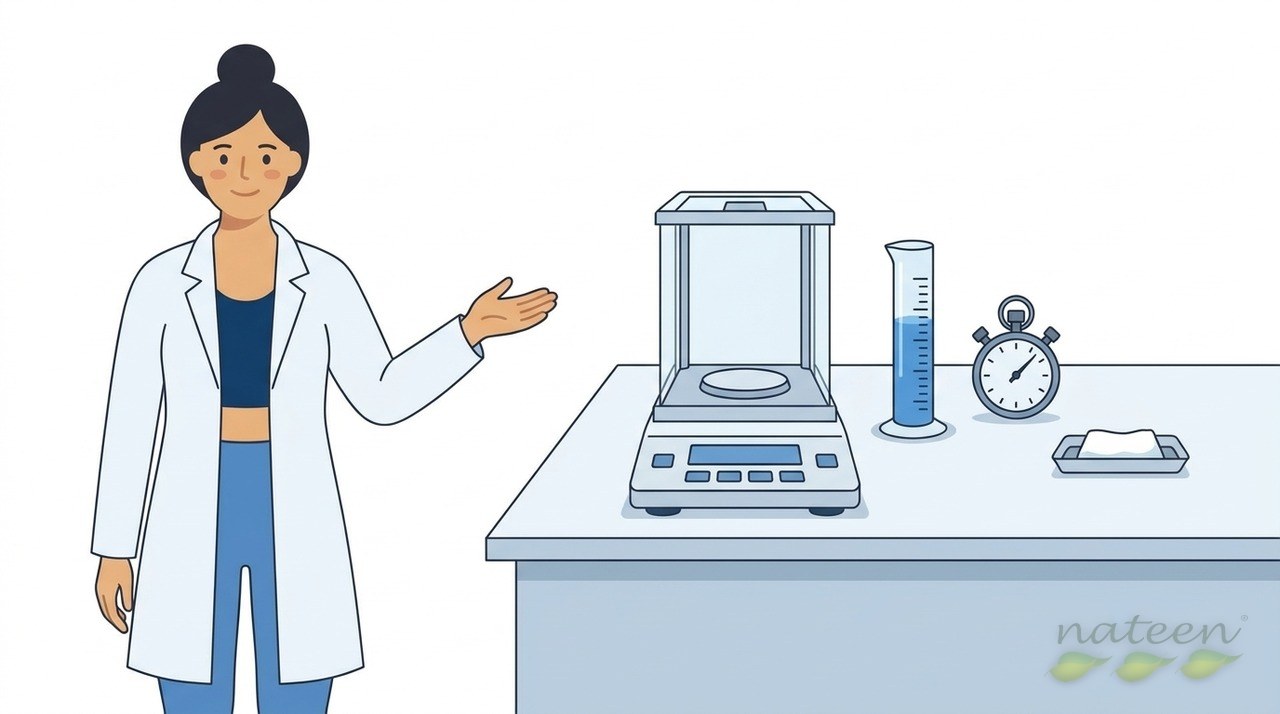
Every combination of materials is tested before production, every material is checked on arrival, and batches are followed during manufacturing. Three main tests, one method, comparable figures.
Read the chapter →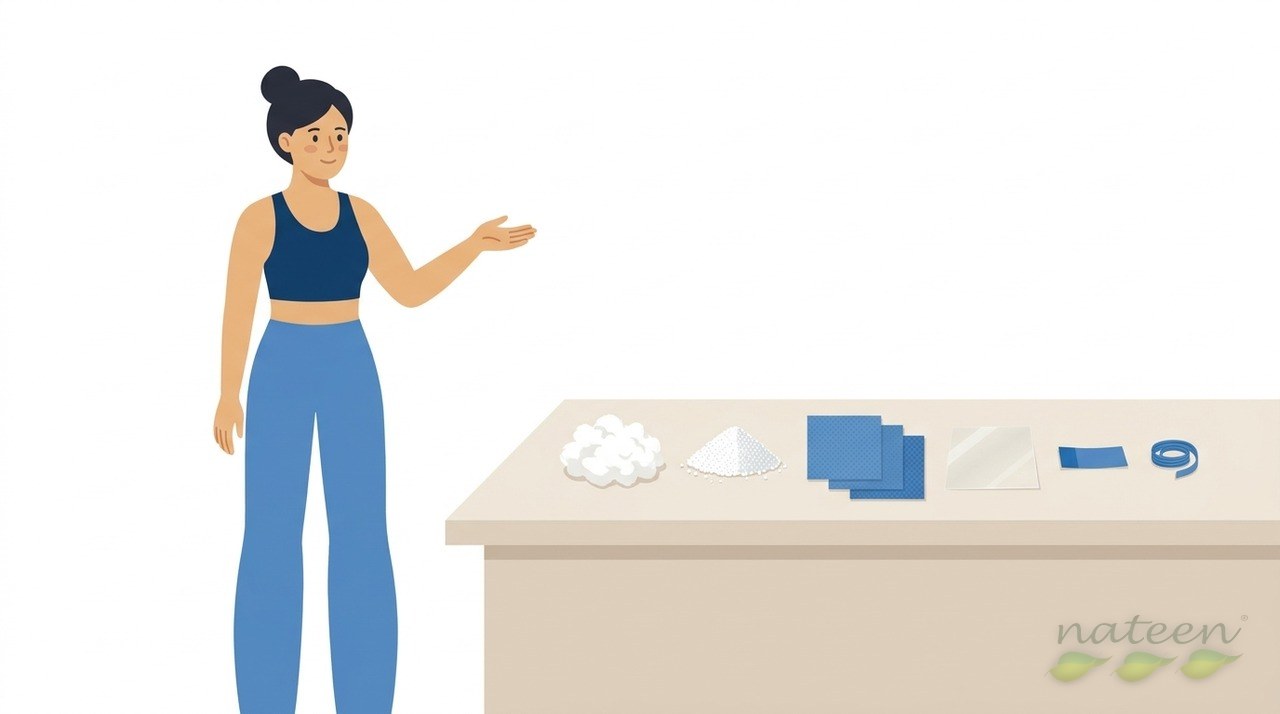
The words you will read on our technical sheets and on other people's, explained in one sentence.
Read the chapter →